












Small techniques that make a big difference.
The things I teach most often in clinic, written down so you can practice at home. Ask us to demonstrate any of them at your next visit.
Pursed-lip breathing
For COPD, emphysema and any moment you feel short of breath. It slows your breathing, keeps airways open longer and lets trapped air out. Practice when you are calm so it is ready when you are not.
When to use it: climbing stairs, bending, lifting, during a flare, or whenever breathing feels fast and shallow.
- Relax your neck and shoulders. Sit upright or lean forward slightly with your hands on your thighs.
- Breathe in slowly through your nose for a count of two, mouth closed. A normal breath, not a deep one.
- Purse your lips as if you were about to whistle or gently blow out a candle.
- Breathe out slowly and gently through pursed lips for a count of four, twice as long as you breathed in.
- Repeat four or five times, or until your breathing settles. Do not force the air out.
Box breathing
Four counts in, four held, four out, four held. It calms the nervous system, slows a racing heart and is the technique I give patients for anxiety, poor sleep and the panic that can come with breathlessness.
Start with a count of three if four feels like a strain. The rhythm matters more than the number.
- Sit comfortably, feet on the floor, one hand on your belly. Breathe out fully.
- Breathe in slowly through your nose for a count of four. Feel your belly rise.
- Hold the breath for a count of four. Keep your shoulders soft.
- Breathe out slowly through your mouth for a count of four.
- Hold with your lungs empty for a count of four.
- Repeat for four rounds, or about two minutes. Use it before sleep, before a procedure, or whenever you feel anxious.
Illustrated guide · tap to enlargeOpen full size · print or save
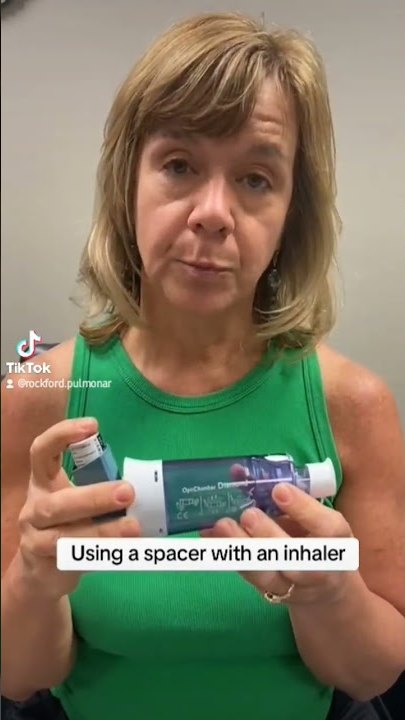
Using your inhaler with a spacer
A spacer is a holding chamber that fits on a puffer-style inhaler. It gets far more medicine into your lungs and far less on your tongue and throat, which also means fewer side effects like hoarseness and thrush.
Clean it weekly: warm water with a drop of dish soap, then let it air-dry. Do not towel-dry, static makes medicine stick to the walls.
Watch: using a spacer with an inhalerDr. Nafsi demonstrates · 1-minute video- Take the cap off the inhaler and shake it well for five seconds.
- Fit the inhaler into the back of the spacer.
- Breathe out fully, away from the spacer.
- Put the mouthpiece in your mouth and seal your lips around it.
- Press the inhaler once, then breathe in slowly and deeply through your mouth. If you hear a whistle, you are breathing in too fast.
- Hold your breath for up to ten seconds, then breathe out normally.
- Wait 30 to 60 seconds, then repeat for a second puff if prescribed. Rinse your mouth after a steroid inhaler.
Illustrated guide · tap to enlargeOpen full size · print or save
Inhaler technique without a spacer
Most people use their puffer too fast, too early or too late, and get a fraction of the dose. Timing is everything: start breathing in first, then press. If you have a spacer, use it; this is the technique for when you do not.
Dry-powder inhalers are different: no shaking, and you breathe in fast and hard, not slowly. Ask us which kind you have.
- Take the cap off and shake the inhaler well for five seconds. Check the dose counter.
- Stand or sit tall. Breathe out fully, away from the inhaler.
- Put the mouthpiece between your teeth and seal your lips around it. Keep your head level.
- Start breathing in slowly through your mouth and press the canister once as you begin. Keep breathing in slowly and deeply for three to five seconds.
- Hold your breath for up to ten seconds, then breathe out slowly.
- Wait 30 to 60 seconds before a second puff. Rinse and spit after any steroid inhaler.
Illustrated guide · tap to enlargeOpen full size · print or save
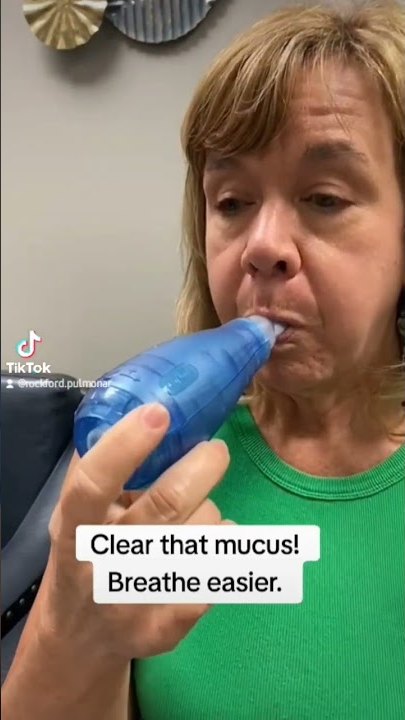
Flutter valve for airway clearance
For bronchiectasis, COPD with mucus, and anyone who wakes up congested. The device, a Flutter, Acapella or Aerobika, vibrates your airways as you breathe out, loosening mucus so you can cough it up.
Best time: morning and evening, before meals, and after any bronchodilator inhaler so your airways are open first. Clean it after every use.
Watch: flutter valve to clear mucusDr. Nafsi demonstrates · 1-minute video- Sit upright, chin slightly up. Hold the device level, mouthpiece in your mouth, lips sealed.
- Breathe in slowly and a little deeper than normal, then hold for two or three seconds.
- Breathe out through the device at a steady, moderate pace, not a forced blow. You should feel the vibration in your chest. Keep your cheeks firm.
- Repeat for 10 breaths.
- Take two or three "huff" coughs, a short, sharp breath out with your mouth open, as if fogging a mirror, and cough up any mucus.
- Rest for a minute, then repeat the cycle. A full session is usually 10 to 15 minutes.
Illustrated guide · tap to enlargeOpen full size · print or save
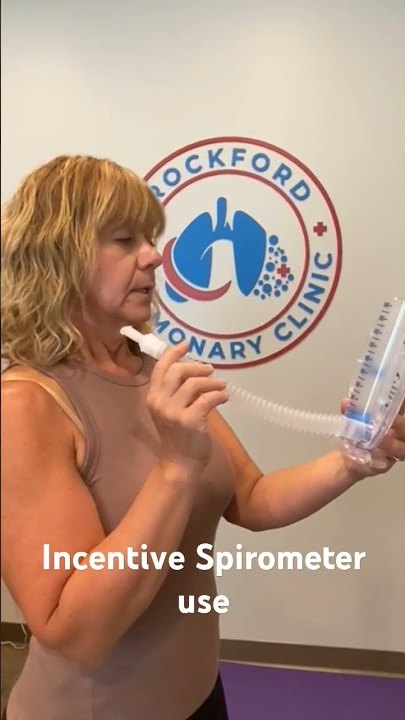
Incentive spirometer
After surgery, pneumonia or a hospital stay, this simple device keeps the deep parts of your lungs open and helps prevent complications. Dr. Nafsi demonstrates it in the video.
Watch: incentive spirometer useDr. Nafsi demonstrates · 1-minute video- Sit up straight on the edge of the bed or in a chair. Hold the spirometer upright.
- Breathe out normally, then seal your lips tightly around the mouthpiece.
- Breathe in slowly and as deeply as you can. Watch the piston rise, keep the small indicator in its target zone, which means you are breathing in at the right speed.
- Hold your breath for 3 to 5 seconds, then let the piston fall as you breathe out slowly.
- Rest for a few normal breaths, then repeat. Aim for 10 breaths every hour while awake.
- After each set, cough to clear anything loosened. Note your best level each day, rising numbers mean recovering lungs.
Move with your lungs
Exercise is treatment for COPD and asthma, it is how you keep the strength and stamina that breathing problems quietly take away. These sessions were recorded for our patients. Start with the gentle protocol and build from there.
Illustrated routines
Three short routines you can do at home with a chair, a counter and a pair of light weights. Stop if you feel chest pain, dizziness or breathlessness you cannot talk through.
Upper body, seated
Shoulders, arms and chest, all from a chair. It loosens the muscles that get tight when breathing is hard work, and it is a good warm-up before the videos below. Put music on.
Breathe out on the effort, out as your arms go up, in as they come down. Never hold your breath.
- Shoulder rolls: 10 forward, 10 back. Slow and big.
- Arm raises: out to the side up to shoulder height, then down. 10 times.
- Overhead reach: both arms up toward the ceiling, breathing out as you lift. 8 times.
- Punches: alternate arms straight ahead, slow and controlled. 20 total.
- Side stretch: one arm over your head and lean gently. Hold 10 seconds each side.
- Shake it out, breathe, and do a second round if you feel good.
Illustrated guide · tap to enlargeOpen full size · print or save
Weight lifting for seniors
Muscle is medicine after 60, for balance, bones, blood sugar and breathing. You do not need a gym. One- to five-pound dumbbells, or two water bottles, are enough to start. Two or three sessions a week is the dose.
Form first, weight second. If you cannot finish 10 slow reps with good form, the weight is too heavy. Add weight only when 12 reps feel easy.
- Start light: 1 to 5 lb dumbbells or water bottles. Sit tall on a firm chair.
- Bicep curls: elbows at your sides, curl up and lower slowly. 10 reps.
- Overhead press: start at the shoulders, press up and breathe out. 10 reps.
- Sit to stand: arms forward, stand up from the chair and sit back down slowly. 8 to 10 times. This is the most important exercise on the page.
- Rows: lean slightly forward, pull your elbows back and squeeze your shoulder blades together. 10 reps.
- Do the set two or three times a week with a rest day in between. Stop if you feel dizzy or short of breath beyond what you can talk through.
Illustrated guide · tap to enlargeOpen full size · print or save
Balance for seniors
A fall is the event that changes everything, and balance is a skill that comes back with practice. Do these at the kitchen counter with something to hold. A few minutes a day is enough.
Progress slowly: two hands on the counter, then one, then fingertips, then no hands, only when each step feels steady.
- Hold the counter. Stand tall, feet hip-width apart, eyes ahead.
- Heel-to-toe stand: one foot directly in front of the other. Hold 10 seconds, then switch.
- Single-leg stand: lift one foot about two inches off the floor. Hold 10 seconds, then switch. Build to 30.
- Side leg raise: keep your body straight and lift one leg out to the side slowly. 10 each side.
- Heel-to-toe walk: 10 steps forward along a line, eyes ahead, hand near the counter.
- Sit-to-stand with no hands: when you are ready, five times. This is the test, and the training.
Illustrated guide · tap to enlargeOpen full size · print or save
Follow along on video
Guided sessions recorded for our patients, from gentle to intermediate.
Gentle movement & breathing protocolFor seniors with breathing problems · start here
Exercise coaching for COPD, asthma and breathing problemsGuided session for seniors
Beginner strength buildingBuild the muscles that support your breathing
Intermediate strength buildingThe next step once beginner feels easy
Wall PilatesLow-impact core and posture work
20-minute protocol: muscle and strengthFor seniors managing weight
Exercise protocol for weight managementBeginner level
All videos on our YouTube channel
Not sure you're doing it right?Bring your inhaler or device to your visit. Our team will watch your technique and adjust it, it is one of the most useful ten minutes in pulmonary care.